
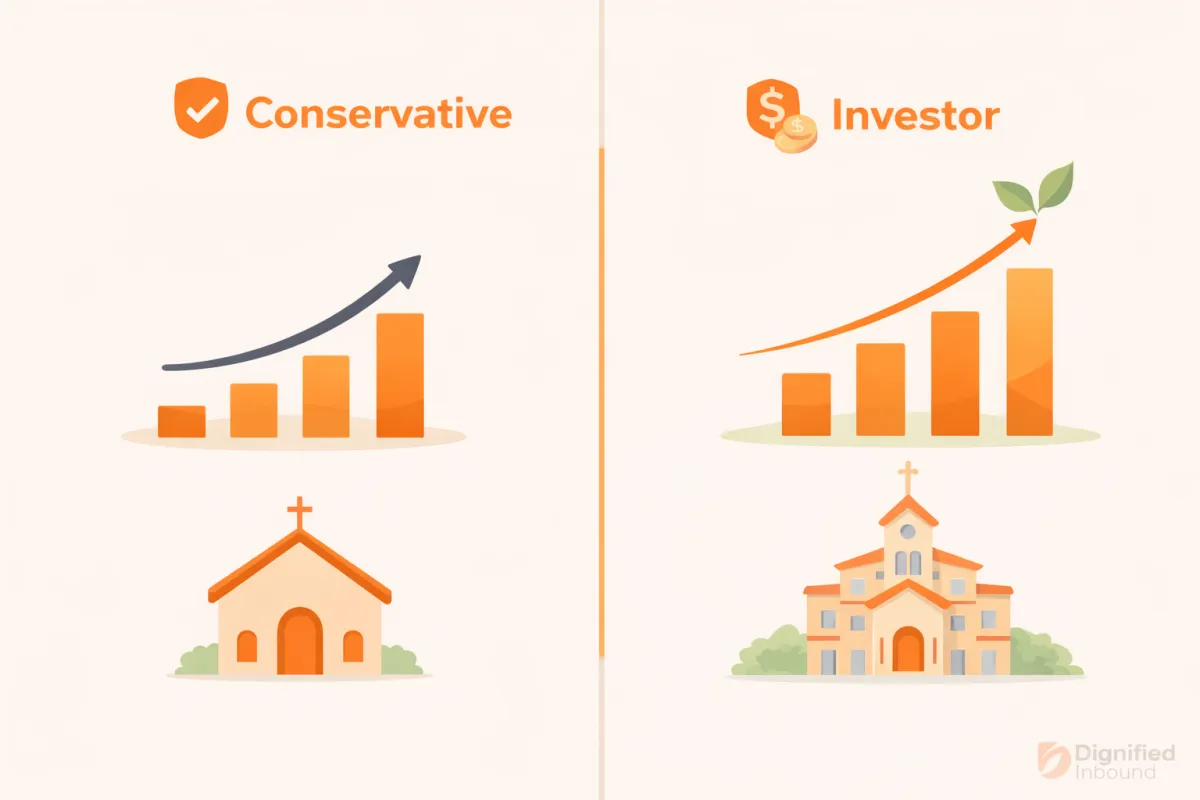
Two Types of Funeral Home Owners: Which One Are You?
After speaking with over 100 funeral home owners across North America, a clear pattern keeps showing up.
There are two types of owners. And which type you are right now will almost certainly predict where your business is headed.
To paint the picture clearly, I'll give you an exaggerated view of each side of the spectrum below.
The Conservative: Busy, But Barely Moving Forward

You know this person. You might even be this person.
The Conservative does everything themselves. They answer the phones, handle arrangements, manage staff, and squeeze in a Facebook post every few weeks. Their idea of marketing is a local newspaper ad or showing their face at a community event, low cost advertising that feels safe but also has the lowest chance of making an impact.
Their funeral home growth? It comes from referrals. Hospice workers. Past families. Nurses who pass along a name. Around 80% or more of new business comes from this word of mouth approach.
It feels safe. It feels familiar. But it's actually one of the riskiest ways to run a funeral business.
The Real Numbers Behind the Conservative Model
Here's what the data actually shows for referral-dependent funeral homes:
Case numbers jump wildly - 15 one month, 5 the next
Summer slumps drain the profits made in winter
Growth averages around 5% per year
With the shift to cremation and inflation, they're often working harder for less take-home pay
The Conservative is busy. But they're not really moving forward. They're often just running in place.
The hard truth: When you rely on referrals, you put the growth of your business in someone else's hands. It's hard to increase business as it's more or less luck if someone recommends you. With the rapid shift to cremation, there's no direct way to generate more referrals to make up the dip in revenue.
The Investor: Growing 15%+ Year After Year

The Investor looks at things differently.
They've built a capable team. They know how to delegate. When they leave the office, things still run smoothly. And every day without them lifting a finger new inquiries land in their inbox from multiple sources.
They've been burned by marketing attempts before. They've tried things that didn't work. But instead of giving up on funeral home digital marketing, they kept testing until they found something that clicked.
What Makes the Investor Different
It's not luck. It's systems.
This type of owner has mastered hiring, they empower their team and can rely on them to get the job done. They employ processes for repeatable outcomes. They assess performance and provide support where needed. In short, they're surrounded themselves with capable A-Players who can be relied upon.
The Investor understands that advertising isn't an expense, it's an investment when done right. They use tools like Google Ads, Bing & Facebook for funeral homes to generate steady, predictable inquiries. They don't depend on whether a hospice nurse remembers their name this week (although they do have referral partners in place).
The result? Growth of 15%+ per year. Five-star reviews that keep coming in. A business that moves forward, with or without them in the room.
The Journey From One to the Other
Here's the thing most people miss: almost every Investor started as a Conservative.
When you're starting out, doing everything yourself makes sense. You're learning the business. You're building trust in the community. The Conservative mindset isn't wrong - it's just a starting point.
The danger is staying there too long.
A life in the Conservative camp has a quiet cost. The long hours add up. The unpredictable case volume wears you down. The gap between how hard you're working and what you're taking home grows wider each year. For many funeral home owners, it eventually leads to burnout.
The Shift That Changes Everything
The move from Conservative to Investor doesn't happen overnight. But it starts with one simple change in perspective:
Stop trying to do everything in the business yourself. Start hiring and delegating repetitive low-skill tasks.
Stop treating marketing as an expense. Start treating it as the engine of your business.
That means investing in funeral home online marketing that brings families to you - not just waiting for someone else to send them your way. It means building systems that work even when you're not watching. It means measuring results, not just hoping for them.
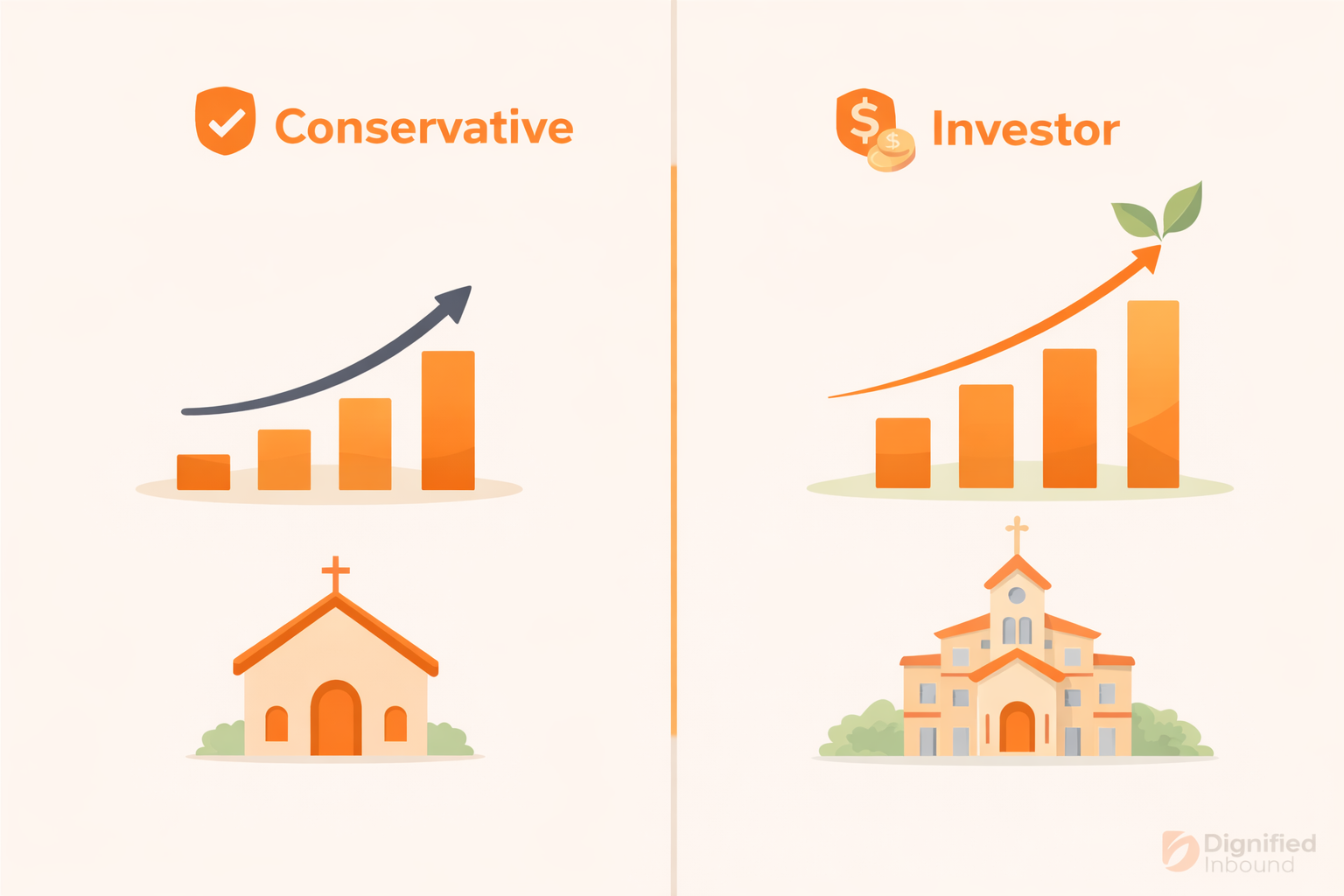
Where Do You Stand Right Now?
This isn't about judging anyone. Both types of owners care deeply about the families they serve. But understanding where you are and where you want to be is the first step toward getting there.
Ask yourself these questions:
Do you know where your next 10 cases are coming from?
Is your growth predictable, or does it feel like you're at the mercy of other people?
Could your business survive a slow summer without draining your savings?
Do you have time off real time off or are you always on?
If the answers make you uncomfortable, that's actually a good sign. It means you're ready for the next chapter.
What the Top Funeral Homes Do Differently
The funeral homes growing fastest in their markets aren't necessarily the oldest or the biggest. They're the ones that treat marketing as a core part of their business, not an afterthought.
They use a mix of strategies: strong Google Business Profile that show up when families search at 2 AM, paid ads that bring in consistent inquiries, and review systems that build trust automatically.
They still value referrals. But referrals are the bonus not the plan.
The Bottom Line
There are two types of funeral home owners in North America. The Conservative works hard and hopes the phone rings. The Investor builds systems that make the phone ring.
Neither is a permanent identity. You can move from one to the other and thousands of funeral home owners already have.
The question is: how long do you want to wait before you start?
